I Did Not Meet Diagnostic Threshold But I Need Support
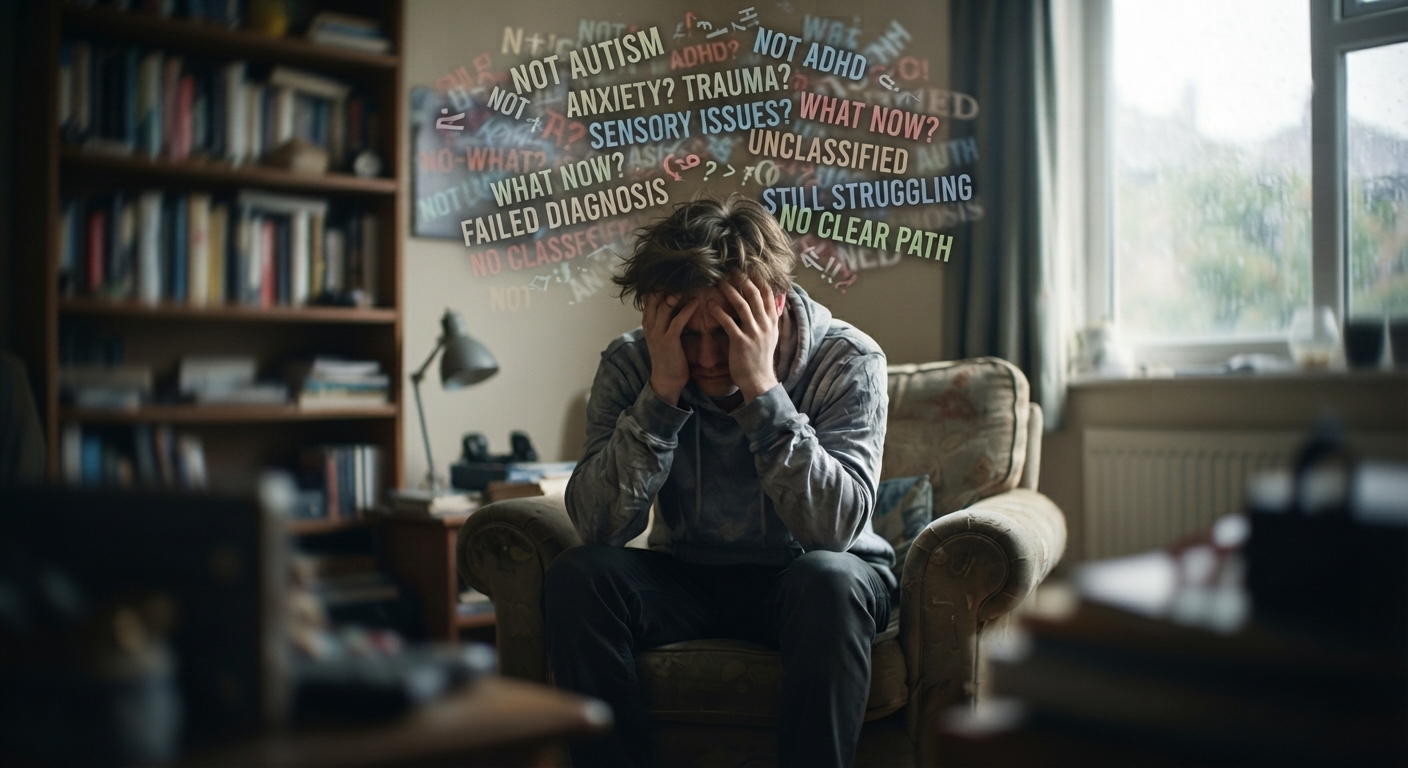
“We’ve had an assessment, but we didn’t receive a diagnosis. Where does that leave us?”
Sometimes you seek an assessment because you have spent months — perhaps years — trying to understand why you or your child is struggling.
You may have gone through an assessment for autism, ADHD, Fetal Alcohol Spectrum Disorder (FASD), cognitive or learning difficulties, or another area of development or psychological functioning.
And at the end of that process, you were told that the criteria or diagnostic threshold had not been met.
That can leave you with very mixed feelings.
You may understand what you have been told, but still be left thinking:
“But we’re still struggling.”
“If it isn’t this, then what is going on?”
“Why are things still so difficult?”
“What are we supposed to do now?”
Or perhaps the outcome simply doesn't feel right to you, and you would like somebody to help you understand how the conclusion was reached.
Not meeting a diagnostic threshold doesn't mean there isn't a difficulty
Diagnostic criteria for conditions such as autism, ADHD and FASD are necessarily quite specific. An individual can experience significant traits or difficulties without meeting all of the requirements needed for a formal diagnosis.
Sometimes there may also be other factors contributing to the picture — such as anxiety, trauma, attachment experiences, learning or cognitive differences, sensory needs, emotional regulation, physical or medical history, environmental demands or other aspects of neurodevelopment.
And sometimes the picture simply isn't clear-cut.
Human beings don't always fit neatly into diagnostic boxes.
Not receiving a diagnosis does not mean that your experiences aren't real. It doesn't mean that your child isn't struggling. And it certainly doesn't mean that you have reached the end of the road in trying to understand what might help.
“I’m not sure whether the assessment got it right.”
You may also come to us because you want an independent psychological perspective on an assessment you have already received.
Perhaps the conclusion surprised you. Perhaps important information doesn't seem to have been considered. Maybe home and school described very different experiences, or you feel that masking, developmental history, trauma, medical experiences or other important aspects of the person's life weren't fully explored.
We can help you review and understand the assessment that has already taken place.
This doesn't mean automatically repeating assessments or assuming that the original conclusion was wrong. A previous non-diagnosis may have been entirely appropriate.
Instead, we can look carefully at the information available, consider the assessment methods and diagnostic reasoning used, identify whether there appear to be important gaps, and help you understand whether further assessment or another professional opinion would be worthwhile.
Sometimes that may provide reassurance that the assessment was thorough and the conclusion makes sense.
At other times, we may identify areas where further exploration could be helpful.
Either way, the aim is not simply to chase a diagnosis.
The aim is to help you understand the person.
There can still be a “what next?”
Whether or not a diagnostic threshold has been met, you can still deserve understanding, support and practical guidance.
We can help you explore the difficulties that remain, identify strengths and needs, consider alternative or additional explanations and think about what might make everyday life easier.
For a child or young person, this might include recommendations for home, school, further education or EHCP planning. For adults, it may include understanding needs within relationships, university, work or everyday life.
Because sometimes an assessment answers:
“Do I meet the criteria for this diagnosis?”
But the question you really needed answered was:
“Why am I finding life difficult, what do I need, and what can I do next?”
At Total Psychology, that question matters too.
A diagnosis can open doors to understanding — but not having a diagnosis should never close the door on understanding yourself or your child.